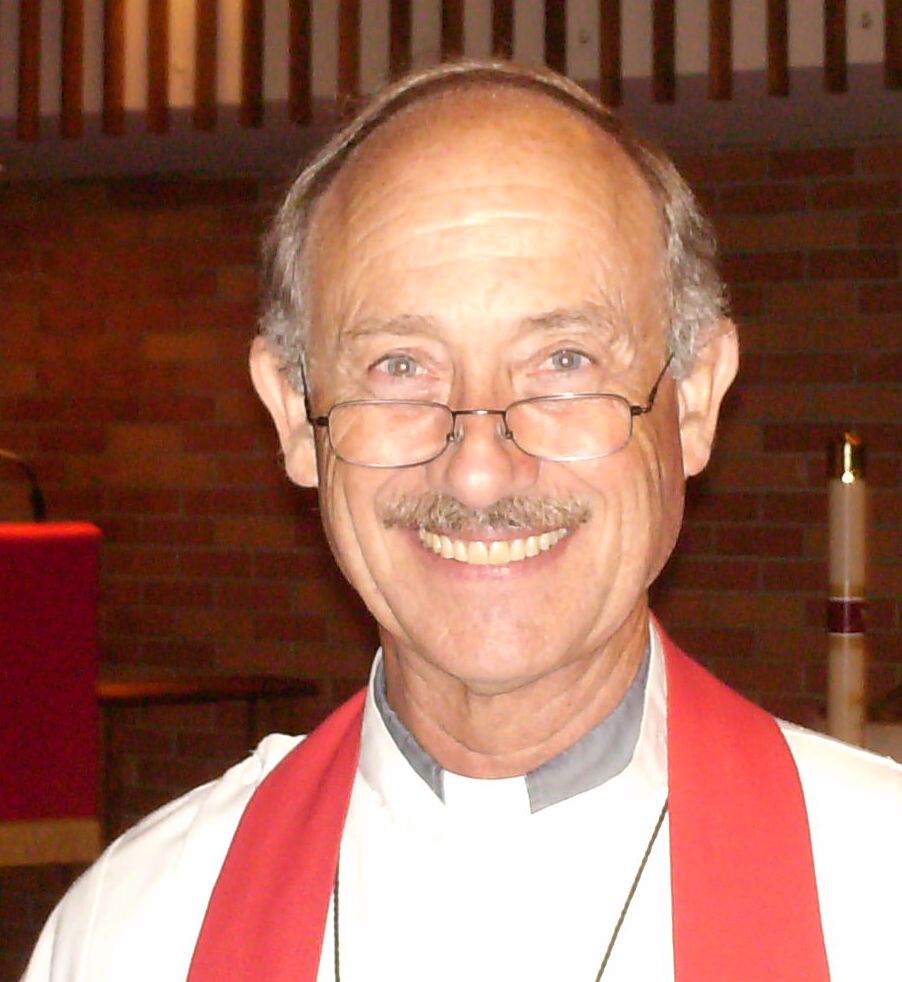
Sunday, November 21, 2010

Christ the King


If you were part of a committee to choose readings for each Sunday of the church year, what readings would you choose for a Sunday called “Christ the King”? You might pick a reading like our epistle lesson today where Christ is called the image of the invisible God and the one in whom the fullness of God dwelt bodily. That sounds like a king.

You might choose one of the majestic readings from the book of Revelation that pictures Jesus with his face shining as the sun and his voice like rushing waters and sword coming from his mouth and his hand holding the seven stars. That sounds like a king.

When we think of the title “Christ the King”-- we naturally think of our Lord as he is now—seated at the right hand of his Father—clothed in majesty and glory—ruling all things in heaven and on earth for the sake of his people the church.

I don’t know if any of us would think to choose the Gospel account of his death on the cross as the main reading-- because the way he is portrayed there—beaten, broken, bloody-- looks nothing like a king. Kings reign in pomp and splendor. Kings rule with power and authority. Kings ride to victory and conquest.

The scene that we have before us today in Luke’s Gospel is anything but that. It is a picture of broken-ness and death and ugliness. And yet the truth of the matter is that the Church got it right in choosing this account of our Lord’s death on the cross for Christ the King Sunday because it captures the central mystery of our Faith: that the fullness of God dwelt bodily in the womb of the Blessed Virgin—that the One who is before all things and after all things entered into human history at a particular point of time under the demands of the law—that the One who is the author of life and creator of all-- died for his creature’s sins. That paradox of a crucified king is the heart of our faith.

Today as we reflect upon God’s Word to us from Luke’s Gospel, we will see that there is a flurry of activity and a whole host of characters and a din of voices that surrounds our Lord’s death—women weeping, soldiers gambling for his garments, rulers mocking him, and criminals dying with him.

But what I want to focus on are the three things that Jesus says in the midst of it all—three things that reveal Jesus’ absolute authority, not only as the King of the Jews—but as the King of kings.

Jesus says: “Weep for yourselves”. “Father, forgive them”. And “Today you will be with me in paradise”. That call to repentance—that petition for forgiveness—that promise of paradise—only our King can make. The Bible says:

And there followed him a great multitude of the people and of women who were mourning and lamenting for him. But turning to them Jesus said, "Daughters of Jerusalem, do not weep for me, but weep for yourselves and for your children. For behold, the days are coming when they will say, 'Blessed are the barren and the wombs that never bore and the breasts that never nursed!' Then they will begin to say to the mountains, 'Fall on us,' and to the hills, 'Cover us.' For if they do these things when the wood is green, what will happen when it is dry?"

From our gospel lesson last Sunday we know why Jesus tells these women that as bad as it is for him at that moment, heading to crucifixion at Calvary, it will be even worse for them in the years to come. Many of these women whom Jesus addresses along the way to Calvary were still be alive in 70 A.D. and certainly their children were alive when the Romans destroyed Jerusalem and the temple and murdered and enslaved its inhabitants.

It’s important that we see that event—not just as a fact of history—but from the Bible’s perspective—as an unmistakable sign of the final judgment still to come. As Jesus carried his cross through the streets of Jerusalem, he knew what was ahead for him—a terrible, painful death and separation from his heavenly Father. But he also knew that suffering and death was not the end for him: that he would be raised from the dead, ascend to heaven, and re-take his rightful place at his Father’s right hand.

In effect Jesus asks the daughters of Jerusalem: “Do you have the same certainty of eternal life?” “Do you know beyond a shadow of doubt that you have the same eternal future in God’s presence?” If they were going to wail and mourn and weep for anyone, they ought to do so for themselves and those they love before it was too late—before the time of repentance came to an end with God’s judgment upon Jerusalem.

The destruction of Jerusalem and the temple—as terrible as it was-- was a picture pointing to something much, much worse-- and that is what will befall all of those on the Last Day who have not repented of their sins and come to faith in Jesus. And so Jesus told the daughters of Jerusalem to weep for themselves.

He tells us the same. Repent in sorrow and heartfelt tears before it is too late—before the day of grace ends. That is what Jesus means when he said: For if they do these things when the wood is green, what will happen when it is dry?

With each passing moment-- the hour of judgment—draws ever closer and the hour of grace ebbs away. And if that were true for the daughters of Jerusalem 2000 years ago, how much more is it true for us here today? We do not know when this world end-- but we know beyond any shadow of a doubt that it will end. That is why today is the day for us to weep and wail—mourn and lament-- our broken human condition and repent of our sinfulness.

There is only One who has the right to call us to repentance --and that is the King of Glory who walked the way of suffering with a cross upon his shoulders, bearing the weight of our sins. It is only in repentance and faith in him that we find the shelter we need to endure the day of his coming.

Forty years after Jesus spoke these words, many of the daughters of Jerusalem and their children tried to take shelter in the mountains and hills around Jerusalem but it became the place of their death.

So it still is for all those who try to take shelter in anyone or in anyplace or in anything other than the one shelter that God has provided in the blood of his Son shed upon Calvary. Our good works and our sincere intentions will not hide our sins from God’s view—only in the blood of Jesus can we find refuge from God’s judgment. The Bible says:

Two others, who were criminals, were led away to be put to death with him. And when they came to the place that is called The Skull, there they crucified him, and the criminals, one on his right and one on his left. And Jesus said, "Father, forgive them, for they know not what they do." And they cast lots to divide his garments. And the people stood by, watching, but the rulers scoffed at him, saying, "He saved others; let him save himself, if he is the Christ of God, his Chosen One!" The soldiers also mocked him, coming up and offering him sour wine and saying, "If you are the King of the Jews, save yourself!" There was also an inscription over him, "This is the King of the Jews."

Father, forgive them. Forgive those who have done wrong. Forgive those who have crucified me by their sins. Forgive those who are ignorant of their sins. Forgive those who are interested only in material things. Forgive those who scoff and mock and ridicule. Father, forgive them—forgive them all.

There was only one person there that day on the rocky hill of Calvary who did not need forgiveness—only one who never needed to be forgiven-- and that was the Lamb of God who sacrificed his life there—the perfect, fully sufficient, atoning sacrifice for the sins of the world: Jesus of Nazareth, King of the Jews—David’s Son and David’s Lord—just like God had promised—the heir who would sit on David’s throne forever as the one true king.

That day on the cross, Jesus did what he came to do --and what he still lives to do: intercede for us poor sinners before his heavenly Father—lifting up the sacrifice of his own life between our sins and God’s wrath. Only a truly great King can petition the living God of the universe and expect to be heard. Jesus is that king. The Bible tells us of that priestly role of the One who sits on David’s throne:

We have one who speaks in our defense—Jesus Christ, the Righteous One. He is the atoning sacrifice for our sins, and not only for ours but for the sins of the world.

It is entirely appropriate that this Gospel lesson of our Lord’s crucifixion was chosen for Christ the King Sunday (the last Sunday of the church year when our attention is focused upon our Lord’s return in glory to judge the living and the dead) because there is only one thing that will matter on that day: and that is Jesus’ death on the cross for our sins. His saving work changes us from objects of God’s wrath bound for hell--to sons and daughters who will live with him forever in paradise. The Bible says:

One of the criminals who were hanged railed at him, saying, "Are you not the Christ? Save yourself and us!" But the other rebuked him, saying, "Do you not fear God, since you are under the same sentence of condemnation? And we indeed justly, for we are receiving the due reward of our deeds; but this man has done nothing wrong." And he said, "Jesus, remember me when you come into your kingdom." And he said to him, "Truly, I say to you, today you will be with me in Paradise."

There was at least one person there day who heard what Jesus had to say about weeping for yourself in repentance—one who heard Jesus ask his Father to forgive—and hearing these words the repentant thief was changed by them for eternity-- for he recognized by faith that the broken, bloody man who hangs on the cross was truly a king with a kingdom to give—and in that late hour—a dying sinner was born again into eternal life.

The Holy Spirit was working though those words that Jesus spoke that day (just as he always works through the preaching of the Gospel) and the repentant, believing thief was changed from an object of God’s wrath to a son of God with a place prepared for him in paradise.

The story of the repentant, believing thief is every Christian’s story. He was unworthy of a place in God’s kingdom. He was guilty as sin under God’s law. He deserved punishment in time and eternity. And yet he heard the promise of forgiveness from the lips of Christ--believed him-- and was saved eternally by the crucified king.

Christ speaks those same forgiving words to us today Holy Absolution and Holy Communion. Can we ever hear them too much! No! Can we receive the gifts of salvation too often? No! Each of us must find ourselves in the same place as the repentant thief—confessing our sins and believing in Jesus and receiving his forgiveness if we are to be saved when the King comes again.

The scene of the cross will be mirrored on the Last Day as a scene of judgment. Sinners will be assembled both on Christ’s left and Christ’s right. Those on both sides will deserve death. But some will be saved and some will not. And the only difference between the two is the one who stands between the two groups—the crucified King. Those who confess him as Lord and Savior will be saved-- and those who deny him will be condemned. I pray that God would grant us his grace so that we may confess Christ as our Savior King today and eternally. Amen.

Christ the King Sunday General Prayer


Lord God heavenly Farther, we stand in awe of You as we lift up our hearts to you in prayer, asking that you would bless us from Zion:

We especially ask Your blessing upon Ray as he celebrates a birthday. Bless him in body and soul all his days. We also ask Your blessing on those who are ill, that You would give them healing according to Your will. We especially ask for Your healing touch upon Bernice who is hospitalized.

Grant that we would always be numbered among those who fear You and esteem Your holy name. Help us by the Holy Spirit to serve You, not looking for reward, but only to do Your will as faithful sons and daughters.

You know that we live in a day when evildoers prosper and the arrogant are called blessed. Keep us from despair and discouragement in the face of injustice. Prosper Your servants who work in government, that the evil would be punished and the good rewarded.

We thank You that You have delivered us from the domain of darkness and transferred us into the kingdom of Your beloved Son by His death and resurrection. Help us to always keep him preeminent in every part of our individual and congregational lives.

Just as we know the destruction of Jerusalem as an accomplished fact of history, help us to know with certainty that there will be a last day and the end of all things and the judgment of mankind. By the power of the Holy Spirit working in our lives through Word and Sacrament, help us to repent of our sins—put our faith in Your Son Jesus—and look forward in hope to being with him in Paradise.

All of these things and whatever else You see that we need—whatever is good for our neighbor and redounds to Your glory—we pray that You would grant to us dear Father in heaven. We ask it in the name of our crucified, resurrected, and ascended King. Amen.

Monday, November 15, 2010

Rev. Franke's Theme Thoughts


Christ the King, Series C November 21, 2010

Lessons for Christ the King Sunday (LSB Proper 29)

Malachi 3:13-18 ~ In the judgement day the distinction between the wicked and the righteous will be seen.
OR Jeremiah 23:1-6 ~ Because the shepherds scattered His flock, God promised to send a righteous King.
Psalm 46 (antiphon: v. 7)
Colossians 1:13-20 ~ By the victory of His conquest on the cross, Jesus has won us for His kingdom of grace.
Luke 23:27-43 ~ Upon His unlikely throne, Jesus was mocked by some, but acclaimed as King by one.

GATHERING THE TEXTS: Waiting Eagerly
The cry of the church is “Come quickly, Lord Jesus!” The thief on the cross heard the words of promise: “Today you will be with me in paradise.” Identified by the title above his head, Jesus was proclaimed the King of the Jews. By giving his life for the sins of the world, he has become King of kings and Lord of lords. He has claimed us as his treasured possession and rescued us from the kingdom of this world to make us citizens in his Kingdom of light. We join the eager cry of the saints in glory, “Come quickly, Lord Jesus!”

PRAYER BEFORE THE SERVICE: When time passes slowly, Lord, give me confidence. Because you have promised the fulfillment of your Kingdom, build up my trust that I may live each day as a citizen of heaven. Then I will eagerly look for your return and urgently share the news of your Kingship! Amen.

STEWARDSHIP THOUGHT: As citizens of Christ’s Kingdom, all that we have is dedicated to the task of gathering those scattered into the domain of darkness and declaring the good news of His redemptive victory over sin and death. We rejoice in His promise that we have a place with Him in Paradise!

OFFERING PRAYER: Christ our King, to You we sing
Our hymn of exaltation!
Here we bring our offering
To use in proclamation!

CONVICTION AND COMFORT: Even though we acknowledge Jesus as King of kings and Lord of lords, we have lost our eager expectation of His return. We have become comfortable with the kingdoms of this world and even question whether those who serve God are any better off than those who do not. And still God says of us, “I will gather them from the places where they have been scattered and will raise up a righteous king to watch over them.” By the blood of His cross, Christ the King says to us, “Today you will be with me in Paradise.”

This Week at Mt. Olive


Good evening, fellow redeemed!

For even when we were with you, we would give you this command: If anyone is not willing to work, let him not eat.

These words from St. Paul in 2 Thessalonians 3 undoubtedly cause problems when we view them as twenty-first century North Americans. I know the usual self-righteous reaction, even from Lutherans: See, these people who don't work don't deserve my help! Unfortunately, the way we normally receive these words belies more about our predisposition to be the judge of the poor than it does what Paul was addressing in this verse.

The Thessalonian church had a problem. It wasn't that people were poor and needed help. It was that people were withdrawing from life and doing nothing but looking for the return of the Lord. In their withdrawal, these folks were looking for others to support them in their misguided approach. Paul was setting the Thessalonians straight on the problem of these who could possibly be considered the forerunners of medieval monasteries. Paul's encouragement for the church and for these who had withdrawn from life was to reengage living as they awaited the return of Christ.

Paul ends today's Epistle text with these words: As for you, brothers, do not grow weary in doing good.
Doing good in the eyes of Holy Scripture means taking care of the poor, the oppressed, the widow, the orphan, etc. Why do such things? We do them because they are important to our Lord and always have been. As those who have been joined to our Lord by faith, doing good, as Paul terms it, is to be second nature among us - not just to those we like and love, but especially to those who are undeserving.

Tonight's Youth Bowling outing was a blast, and a good time was had by all. Thank you to Sue Catherman and Emily Jirovec for helping tonight, too. Attending to bowl were Raymond Wright, Cassi Hamer, Ashley Hanelt, Wayde Adler, Matthew Catherman, Anika Tessman, Jonathan Jennings, Michael Jennings, Emily, and myself. Emily triumphed in the first game over all bowlers with at 106. The second game saw efforts at bowling with the opposite hand, granny shots, and reverse granny shots, but Pastor prevailed with a 113.

This week at Mt. Olive, preparations for the Children's Christmas Pageant will begin as the program is written and given to Sunday School teachers. I hope to have this in your hands no later than Friday morning. S. S. teachers, if you haven't heard from me by then, please feel free to send me a blast.

The other day, I received a note that Cub Scout Pack 278, which is owned by Mt. Olive, was revitalized through a special effort by our area scouting exec, Jeremy Barnes. The first meeting will be this Thursday evening!

Prayer Concerns:
Those who serve in our armed forces and their families: Rob Vadney (Afghanistan), Richard Rhode (North Carolina), Dru Blanc, John Sorensen, Ryan Radtke (Corpus Christi)
Our homebound: Ann Cleveland, Ruth Prytz, Donnae Blake, Ruby Rieder, Norene Estes
The Church, as she proclaims Christ crucified faithfully as His appearing in glory nears each day
Those who travel in the upcoming holiday season, especially students who will be returning home for a much needed break

This Week at Mt. Olive:
Monday, November 15:
6 p.m.
Zumba Aerobics

6:30 p.m.
Board of Elders

Tuesday, November 16
Pastor out of the office in the a.m. for Bokenkamp meetings

7:30 p.m.
Young Adult Bible Study at Barnes and Noble (Angels)

Wednesday, November 17
Happy birthday, Kathy!
8:30 a.m.
School Chapel

9:30 a.m.
Bible Study (Deuteronomy)

6 p.m.
Zumba Aerobics

7 p.m.
Choir Rehearsal

Thursday, November 18
6:30 p.m.
Cub Scout Pack 278

7 p.m.
STARC

God bless!
PKJ

Sunday, November 14, 2010

Our Redmption Draws Near!


The text for our meditation on God’s Holy Word is the Gospel lesson appointed for the day. I bring you grace, mercy, and peace from God our Father and from our Lord and Savior Jesus Christ. Amen.

In 70 A.D. Roman armies surrounded Jerusalem to put down a Jewish revolt. All supplies were cut off. So horrific was the siege that one woman killed, roasted, and ate her infant child. In the ensuing massacre, 1.1 million Jews lost their lives. Another 70,000 were taken captive and paraded through the streets of Rome as the spoils of war. The temple of Jerusalem was so completely destroyed that today not one stone is left standing upon another.

There was a group of people living in Jerusalem who were spared these terrors—the Jewish Christians of Jerusalem. You see, Jesus had prophesied that Jerusalem and the temple would be destroyed 40 years before it happened. The Jewish Christians believed his words, recognized the signs of what was to come—fled to a town called Pella on the Sea of Galilee—and were spared.

And so what is the connection between these ancient events of history --and Jesus’ Words to us today-- and our own lives of faith? Just this: the destruction of Jerusalem is a sign pointing to the final judgment and the destruction of all things. Like the flood in Noah’s day and the fiery destruction of Sodom and Gomorrah in Abraham’s day--the destruction of Jerusalem is a sign that there will be a Last Day—and the judgment of all men and the destruction of all things.

God does not want anyone to perish eternally on that day—but that people would turn from their wickedness and live. In Noah’s day and Abraham’s day and the apostles’ day he gave warnings that his judgment was coming—he provided signs that could clearly be seen so that all people would be left without excuse. The Jewish Christians believed Jesus’ words—understood the signs for what they were—and so were saved.

Jesus speaks to us today for that same purpose and to that same end—that recognizing the destruction of Jerusalem and the temple as an accomplished fact of history—knowing that Jesus promised that very thing 40 years before it happened—we too would: believe his words about the Last Day—be watchful for the signs of his return-- and be saved.

As we reflect upon God’s Word today we will learn what the signs are that point to the final judgment—we will consider what our response ought to be—and we will hear the promises that Jesus makes to us which will strengthen our faith so that we can face that day with hope and know it to be the day of our redemption. The Bible says:

While some were speaking of the temple, how it was adorned with noble stones and offerings, Jesus said, “As for these things that you see, the days will come when there will not be left here one stone upon another that will not be thrown down.” And they asked him, “Teacher, when will these things be, and what will be the sign when these things are about to take place?”

Please note that Jesus never answers that first question: when will these things be? In the same way, Jesus never tells us when the Last Day will be and any religious leader that says he knows the answer is a false prophet and deceiver of God’s people.

But Jesus did answer their second question: what will be the signs? He told them just exactly what would happen before Jerusalem and the temple were destroyed so that they could be prepared no matter when it happened.

Forty years later, the signs occurred and the destruction took place just exactly as Jesus had prophesied.

Josephus, a Jewish historian who was an eye witness to these events, reported: the odd things that happened in nature, how the Romans surrounded Jerusalem, and the terrible things that even mothers did to their own children. We know from Luke’s history of the early church how the Christians were persecuted and yet how this persecution—rather than destroying Christianity-- actually served to extend its witness.

All of these signs took place just exactly as Jesus had prophesied. It was with that same truthfulness that Jesus prophesied- the end of all things- and his return in glory- and the judgment of all people -and the redemption of those who were his own.

And so, we who wait for that coming day can look back in history and know with certainty what our Lord has revealed of the future. But there are other signs too—sings beyond the events of history--signs happening at this very moment.
There are signs in nature. There are signs in the family of nations. And there are signs in the church. Of signs in the church, Jesus said:

“See that you are not led astray. For many will come in my name, saying, ‘I am he!’ and, ‘The time is at hand!’ Do not go after them."

Over the last two thousand years of the church’s history there have been countless deceivers within the outward, visible boundaries of the Church: false teachers who teach doctrines not found in the Bible--“date-setters” who claim to know when Jesus is coming and have been proved wrong again and again--and the David Koresh types who actually claim to be the Messiah.

To these signs of the end that are found in the church, Jesus says: Watch out! Be on your guard! Do not follow them! Instead we are to listen to his words- believe what he says- and remain steadfast in the faith that is taught in the Bible for it is God’s Word and has been proved trustworthy and reliable and a firm foundation for our lives.

Regarding signs among the family of nations Jesus says that before his return there will be wars and tumults—nations will rise against nation and kingdom against kingdom. And of course know how true this is from the pages of history and today’s newspaper and the evening news. Many folks in this congregation have lived through WWII and the Korean War and the war in Vietnam and the two Gulf wars and the wars in Iraq and Afghanistan.

Regarding signs in nature Jesus says that there will be great earthquakes, famines, and pestilences—the roaring of the sea and the waves. And hearing these words from our Lord we cannot help but think of the famine in Africa and the earthquake in Haiti and the Tsunami in the Indian Ocean—and these are only the most recent natural disasters over the last two thousand years of human history filled with such disasters.

Right there is the faith challenge that we have to face. It seems that all we know of the world is: war and bloodshed between nations- death and destruction from nature-- and the church torn asunder by false prophets. We are tempted to believe that this is just how the world is- this is how it has always been- and this is how it will always be.

But Jesus says that we are not to view a violent world and a broken creation and divided church as the normal course of events-- but to view these events as signs of the end—signs of a world that is heading for destruction- signs that humanity is headed for judgment.

Jesus wants us to be prepared for his second coming in glory—he wants us to be found faithful on that day---and so he directs our attention to the broken-ness of this world as an enduring sign that what we are really seeing is the effects of sin which will be changed forever on the Last Day. The Bible says that:

The creation waits with eager longing for the revealing of the sons of God—AND--the creation itself will be set free from its bondage to corruption…

Rather than driving us to despair, the signs that we see all around us are intended by Jesus to point us to a hope that lies beyond the crumbling edifice of this dying world. When Jesus told the disciples that not a stone would be left standing upon another of the temple—it must have been hard to believe—but they did believe him and were saved.

Jesus wants us to believe the same—that the very foundations of this world will shaken and destroyed—but we who believe in him will endure and be saved. He promises us that not even a hair on our head will perish—that we can be hopeful even in dark times for we know that they are leading us toward our final redemption.

These promises have been secured and guaranteed by Jesus’ death and resurrection. Sin and evil does not have the last word about us—his forgiving death on the cross does. Death does not have the last word about us—his resurrection does. Victory over evil- and victory over death- are assured to all of those who trust in Jesus.

Our bodies that are laid in the grave will be raised on the Last Day and not even the smallest bit of our bodily life will be lost. The evil in the world that seems to have the upper hand will be punished when Jesus returns. And a broken creation that brings cancer and drought will be restored to the perfection that it had in the beginning.

Jesus wants us to see the signs of the end for what they are—so that we would have a vision of the future: a vision of the future that extends far beyond this world—a vision of the future that is based upon his promises—a vision of the future that shapes our lives in this broken world until the day of our redemption.

And so what does that life look like—that life that is shaped by the promise of our final redemption at the Lord’s return?

1. We are watchful and alert to the signs of the times. When we hear of some war—when a natural disaster occurs—when we encounter some falsehood being taught in the church—right then, in that moment-- we are to be reminded that our Lord is coming again and that these moral and physical evils will not endure that day.

2. We are calm and confident. Jesus says: “When you hear of wars and tumults, do not be terrified, for these things must first take place, but the end will not be at once.” Let the unbelieving world around us “faint with fear and foreboding” as Jesus says, we know how the story ends—we know the Author of history—we know that we will endure and gain our lives and that not even a hair on our head will perish because Jesus has promised that very thing.

3. We see hardships and difficulties as opportunities to witness to Jesus. Jesus warned his disciples that “they will lay their hands on you and persecute you, delivering you up to the synagogues and prisons, and you will be brought before kings and governors for my name's sake. You will be delivered up even by parents and brothers and relatives and friends. This will be your opportunity to bear witness."

We know about the persecution of the church from the pages of history—and yet how hardship and persecution—far from being an impediment to the mission of the church—was actually the mechanism through which the Gospel spread throughout the world. The same thing is true for us.

More and more we live in a culture where Christians are held up to contempt and our values and lifestyles are the objects of ridicule and even our own families reject those things that we hold sacred. Jesus promised that this is how it will be. But rather than moan and groan, we see this is as our opportunity to bear witness to Jesus-- and the Lord will keep his promises to give us a mouth and wisdom, which none of your adversaries will be able to withstand or contradict.

4. Finally, we are people of hope because Jesus has already told us where all of this is leading: to our final redemption. Jesus says that:

"The powers of the heavens will be shaken. And then they will see the Son of Man coming in a cloud with power and great glory. Now when these things begin to take place, straighten up and raise your heads, because your redemption is drawing near.”

The road to resurrection went through the cross for Jesus and it will for us too. Rather than being broken and bowed down by what is happening in the world around us—Jesus says that we are to straighten up and raise up our heads because we know that with the passing of each day the Lord’s return and our final redemption is one step closer.

The world around us is moving to judgment and destruction and we need to see the signs of that for what they are---but we who have been saved by the blood of the Lamb are moving towards a day of redemption when sin and death will no longer have any claim upon us.

Two thousand years ago the Christians of Jerusalem listened to these words of Jesus—believed what he said—were spiritually awake and aware of the signs around them-- and were saved. God grant the same to the Christians in this place. Amen.

And now may the peace of God that passes all understanding keep your hearts and minds in Christ Jesus unto life everlasting. Amen.

General Pray--Proper 28c


Lord God heavenly Father, we lift up our hearts to You in prayer, trusting in Your help:

You have promised to be our keeper—to guard our going out and coming in from this time forth and forever more and so we ask that You would be with and uphold those who are ill. Grant them healing according to Your fatherly will.

As we look forward to the day of Christ’s return in glory, help us by Your Holy Spirit to remember Your holy law, statutes, and just decrees and walk in them according to Your will and in this way show reverence for Your holy name which You have bestowed upon us in Baptism.

According to Your promise, turn the hearts of parents to their children and the hearts of children to their parents and so bless our marriages, homes, and families. Help us to fulfill our earthly vocations in ways that serve one another and You in love. We especially ask Your blessing upon Zachary as he celebrates a birthday. Bless him in body and soul all his days.

We ask Your blessing upon our national economy and upon our own jobs and financial well-being. Direct the unemployed to useful labor that will provide for their needs. Lead us to be generous to those who are suffering economic hardships. Sustain in us all a strong work ethic so that so that we might provide for our families, help those in need, and give generously for the work of the church. Help us to not grow weary in doing good.

Give us an ongoing awareness that this world and the things of this world will not endure forever, but there will come a Last Day. In the midst of natural disasters and socio-economic distress and political uncertainty help us to see these events as signs of the end so that day would not catch us unaware but that instead we would recognize that our redemption is drawing near.

Bless Your church on earth. Protect us from false teachers who would deceive by Your name and lead us astray. Help us to always hold fast to the firm foundation of Your Word. In the midst of uncertain times, grant us the mouth and the wisdom to bear witness to Your Son Jesus Christ and the redemption we have in Him.

Dear heavenly Father, whatever else You see that we need—whatever is for the good of our neighbor and redounds to Your glory—we pray that You would grant to us, Your children. We ask it Jesus’ name who taught us to pray:

Monday, November 8, 2010

Rev. Franke's Theme Thoughts


Pentecost 25, Series C November 14, 2010

Lessons for Twenty-Fifth Sunday after Pentecost (LSB Proper 28)

Malachi 4:1–6 ~ On the Day of the Lord, God’s righteousness will consume the wicked and heal His people.
Psalm 96 (Antiphon: Psalm 96:13)
2 Thessalonians 3:(1–5) 6–13 ~ Believers are encouraged to work at doing good to show the love of Christ.
Luke 21:5–28 (29–36) ~ All kinds of disasters warn that this world will give way to God’s eternal kingdom.

GATHERING THE TEXTS: Waiting Patiently
We become impatient when we see that evildoers prosper and no distinctions are made between the wicked and the righteous; we long for the triumph of good over evil, just as God's messenger, Malachi declared. While we wait for Jesus, our Lord, to return, we are to do our duty to God and our neighbors, and not grow weary of doing good. God’s righteousness will be revealed and those who suffer for Jesus’ name will be vindicated through trials and tribulations when God’s kingdom is established with Christ as King.

PRAYER BEFORE THE SERVICE: When there is little time, Lord, give me patience. Where there is injustice, grant me understanding. Then as I try to live my life according to your Word, I will await your judgment on sin and your fulfillment of the Kingdom in glory. Amen.

STEWARDSHIP THOUGHT: Even though it seems God is so slow to establish His righteous rule, there are plenty signs to remind us we should use the goods He has placed in our control to show His love to those who do not yet know His mercy in Christ Jesus.

OFFERING PRAYER: Disasters in this world, O Lord, are sure to terrify,
And bring a lot of suff’ring – loss of life and property.
They also show us that our goods are worthless when we die
And give us loving deeds to do and opportunity.

CONVICTION AND COMFORT: We are impatient for justice when we see evil prevail. We don’t trust God’s plan because we don’t know what it is. We can’t wait for God’s time table because we don’t know how long it will take. But God has given us enough to do while we wait; we are to work hard to alleviate suffering and show the oppressed God’s love in our actions. We can rejoice that God has overcome evil and impatience, even in our own lives, by the cross of His Son. He is the One who will come, at God’s right time, to establish God’s righteous rule.